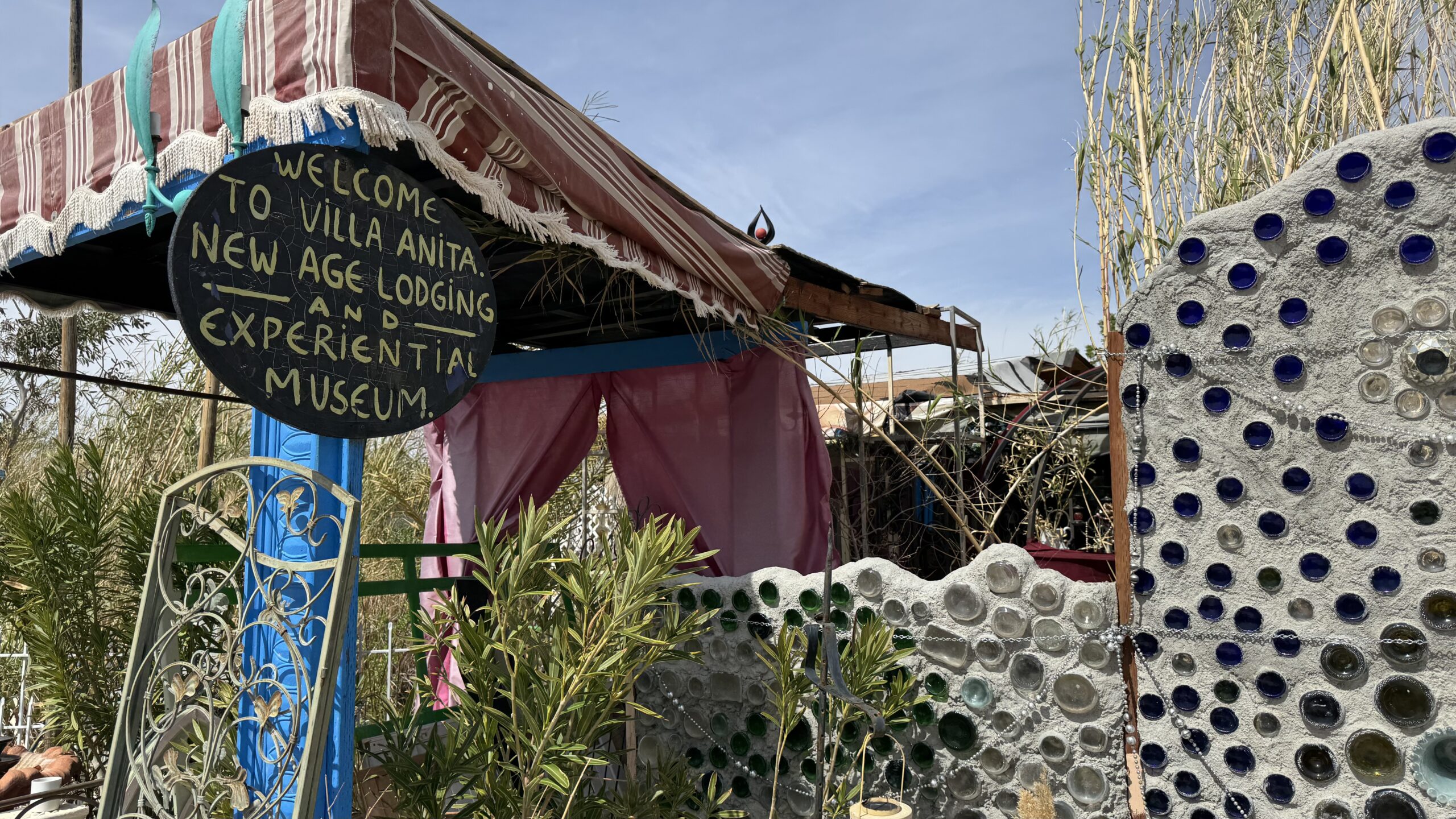
By the time Carlo Roncancio found his way to the end of a dirt road in the tiny desert town of Tecopa, California he’d already lived through several full lives in nightlife, fashion, photography, and entertainment.
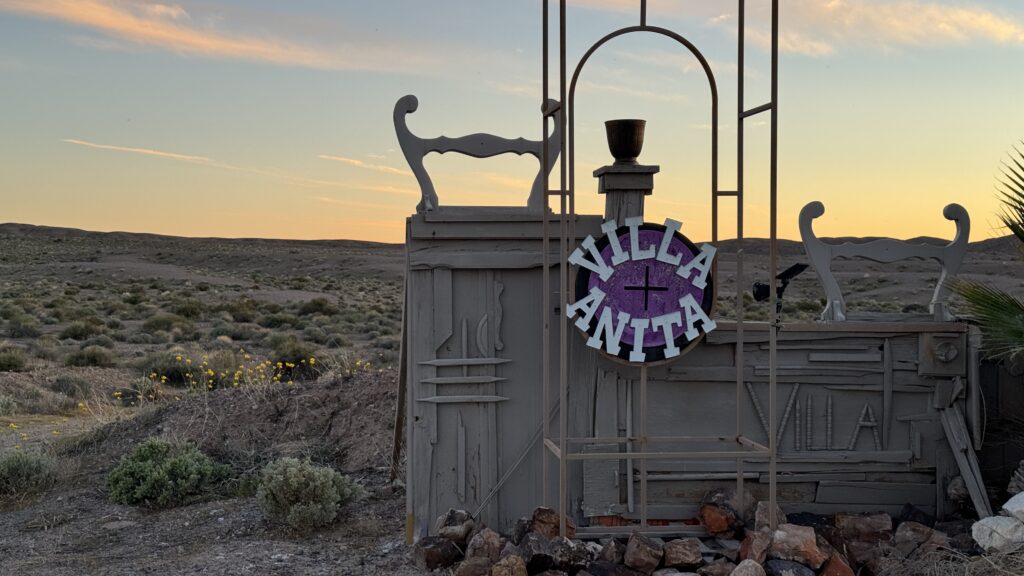
His home, the micro resort Villa Anita Death Valley, which he now co-owns and runs with his husband, artist Jack Holloman, sits where Tecopa thins out into open desert and the sky suddenly feels twice its proper size. The Las Vegas strip sits ninety minutes away. Guests roll in from all over the world. There’s no cell service, only patchy WiFi, and the silence has a physical weight. Coyotes thread the horizon at dawn, the Milky Way cuts cleanly across the night, and the longer you stay, the more your ordinary life feels like something that happened to someone else.
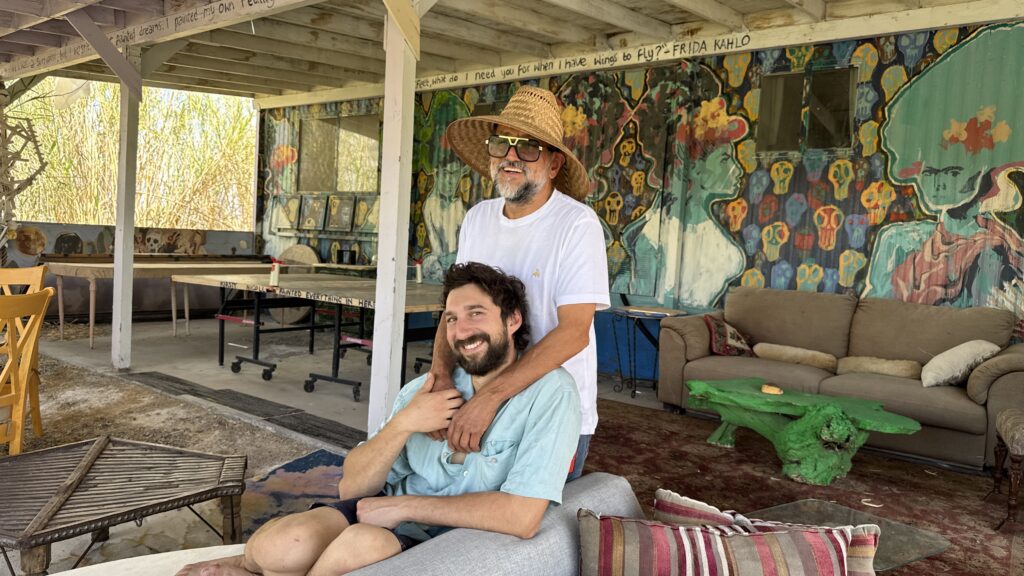
Beyond hospitality, film and photo shoots, events, workshops, and eco-tourism, Villa Anita Death Valley functions as a desert think tank for art and ideas—a place where people don’t just pass through, they plug into an ongoing experiment. Artists come to build site-specific installations from Carlo and Jack’s trove of salvaged objects; writers disappear into the quiet and finally finish a draft; designers and filmmakers prototype worlds at 1:1 scale, testing color, light, and texture in real time against the Mojave sun. Almost anything is for sale: relics, antiques, objets d’art, all from Carlo’s lifetime of collecting. Collectors and guests commission or acquire jewelry, ceramics, and works on paper by Jack born directly from the site. Curious visitors walk the garden as a living syllabus in water-wise design, compost systems, and microclimates, learning how shade, stone, and time become collaborators. Villa Anita Death Valley isn’t just a place to stay—it’s a laboratory, a studio, a retreat, and a slow-burning school for how to live creatively with the desert.
From Disco Nights to Desert Light
Long before he landed in this tiny town, Carlo’s life moved to a different soundtrack. He grew up in New York during the disco era, one of those kids who always seemed to know the next move before it technically existed. He memorized choreography, then bent it into something of his own—sharp turns, impossible spins, a kind of glittering looseness that made people stop and watch.
In the 1970s, he and his sister were the underage kids slipping past the velvet ropes at Studio 54 and other downtown clubs, dressed like they’d been expected, dancing like they’d been hired. They’d spent years reverse-engineering every move they saw on Soul Train and on the floor, then mutating them—spins that broke into freezes, drops that hit just off the beat, partner work that bent disco into something grittier and more evolved. Half the time, they were improvising steps that didn’t even have names yet, years before anyone knew what Saturday Night Fever was. Circles would open around them. Carlo learned how to hold a room with nothing but timing, instinct, and sheer presence.
That instinct—to turn a space into a scene—followed him into his many lives. He styled shoots, worked behind the camera, curated looks and atmospheres for other people’s fantasies. If there was a back door into glamour, Carlo had found it at some point, and probably wallpapered it himself.
Eventually, the energy shifted. The late hours and the constant churn of New York, Los Angeles, Las Vegas started to feel more draining than intoxicating. The idea of building a world on his own terms—not just for a night or a shoot, but for good—began to eclipse everything else. That’s the road that led him, eventually, to Tecopa and to a sun-faded midcentury desert house designed by architect Robert Blake in the 1930s. What began as a place to live became a project, then a practice, and then something bigger and more ambitious: Villa Anita Death Valley.
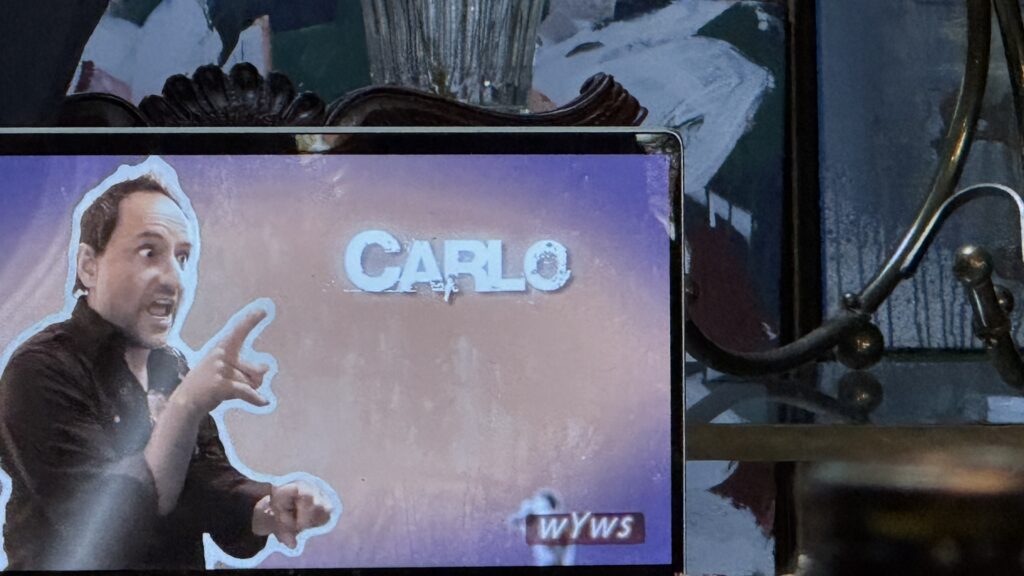
There was a moment, back in the early years of his time in Tecopa, when Carlo’s life almost became a reality show. A pilot was shot—cameras tracking his high-voltage charisma, his fashion-world Rolodex, the parties, the makeovers, the sheer theater of his day-to-day. Producers wanted to package the spectacle, cut it into episodes, beam it out into living rooms. The show never went to series, but in a way, Carlo wound up making something stranger and better: at Villa Anita Death Valley, you don’t watch his world on a screen, you step into it. The maximal rooms, the meticulous outfits, the sudden, cinematic tableaus at sunset—all the things a TV crew tried to capture are now available in real time, for anyone willing to drive to the end of that dirt road and live inside the story for a few days.
Brandeis to Backroads—An Artist’s Slow Arrival in the Desert
Jack Holloman arrived by a different route that also began in New York. He moved to Massachusetts to study biology and fine art at Brandeis University, steeping himself in theory and studio practice while quietly wondering what it would look like to build an art life outside traditional institutions. After graduating, he didn’t go straight into galleries. Instead, he went into the dirt. His parents are scientists afterall.
For about a year, Jack participated in WWOOF—Worldwide Opportunities on Organic Farms—moving between West Coast farms, land projects, and off-the-grid experiments. He learned how water is caught and lost, how compost becomes soil, how shelter works when you don’t have much material to start with. It was a year of manual labor and improvised problem-solving, a curriculum in slowness and scarcity no university offers.
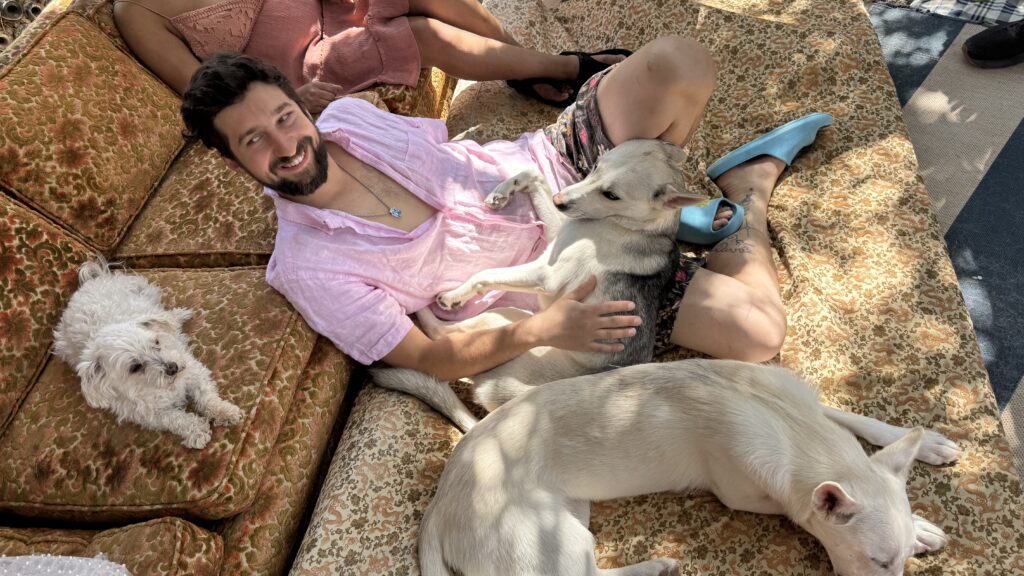
He eventually found his way to Villa Anita Death Valley on a tip from a former professor—at first as a helper, drawn by the idea of an art environment in the middle of nowhere. What was meant to be a stop became an anchor. Over the years he’s been there, the property and his work have braided together.
Somewhere in that process, the collaboration between Jack and Carlo turned into a love story. Working side by side—shifting furniture, laying irrigation line, painting, cleaning rooms, hosting guests—they fell in love, married, and folded their life partnership into the project itself. Villa Anita Death Valley isn’t just their workplace; it’s a shared, evolving artwork and a home.
Villa Anita Death Valley: A Handmade World with Rooms to Stay
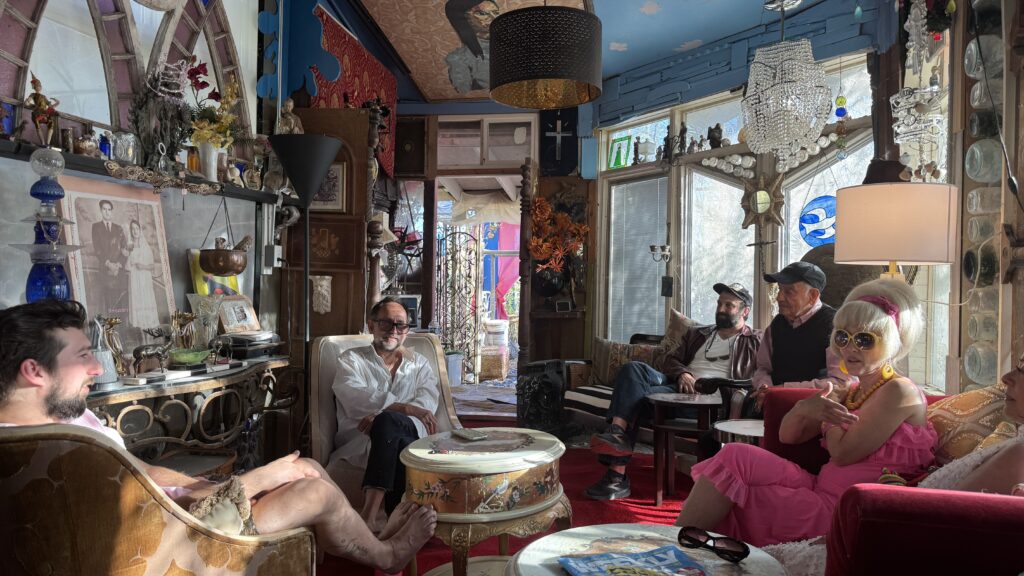
Villa Anita Death Valley is not a ranch, and certainly not your mother’s resort. Its namesake is Carlo’s grandmother, a hospitality entrepreneur from Moniquirá, Colombia. A healing presence and guiding matriarch, Anita shaped the family’s sensibility in matters of design, culture, and the art of welcoming others.
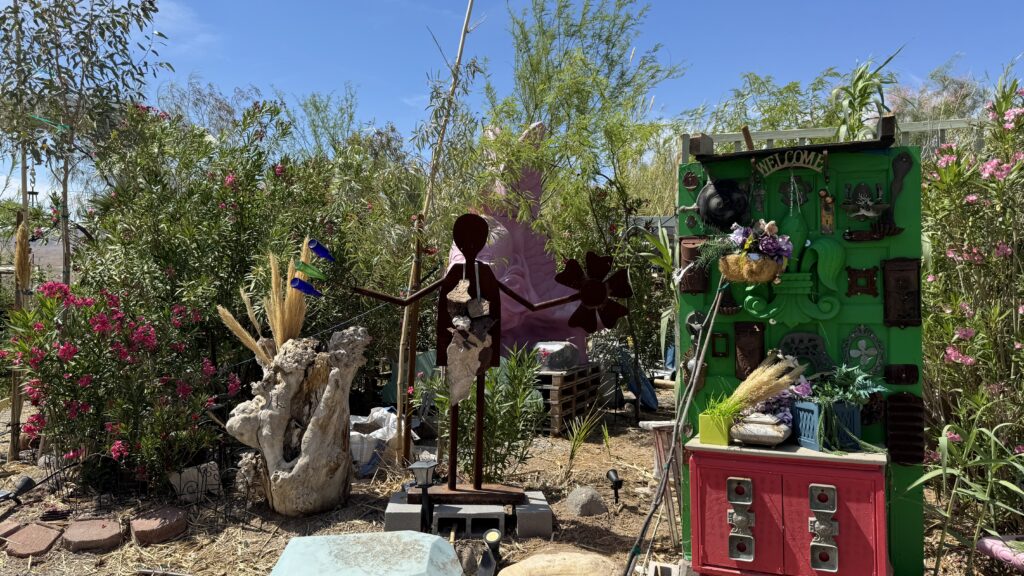
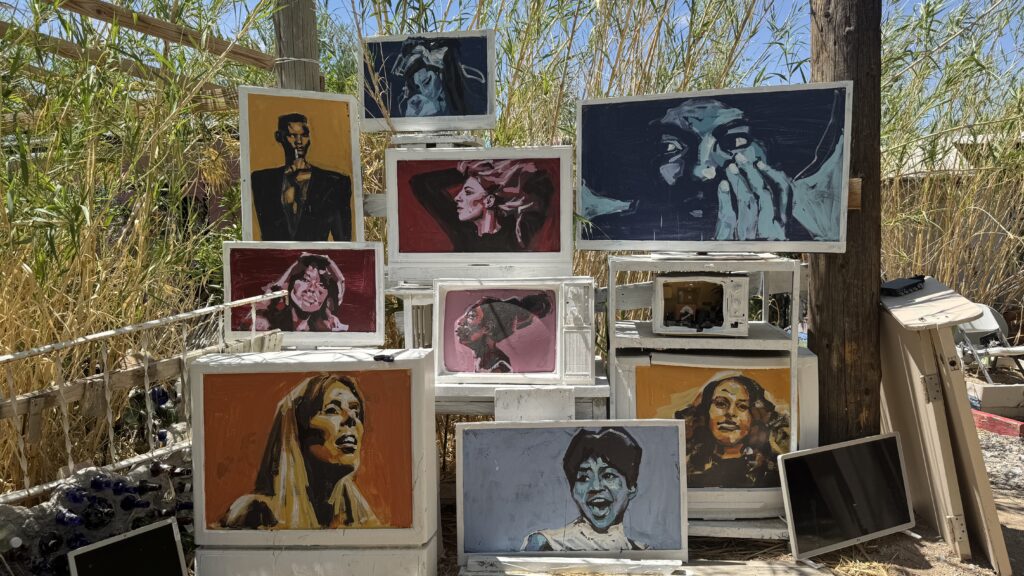
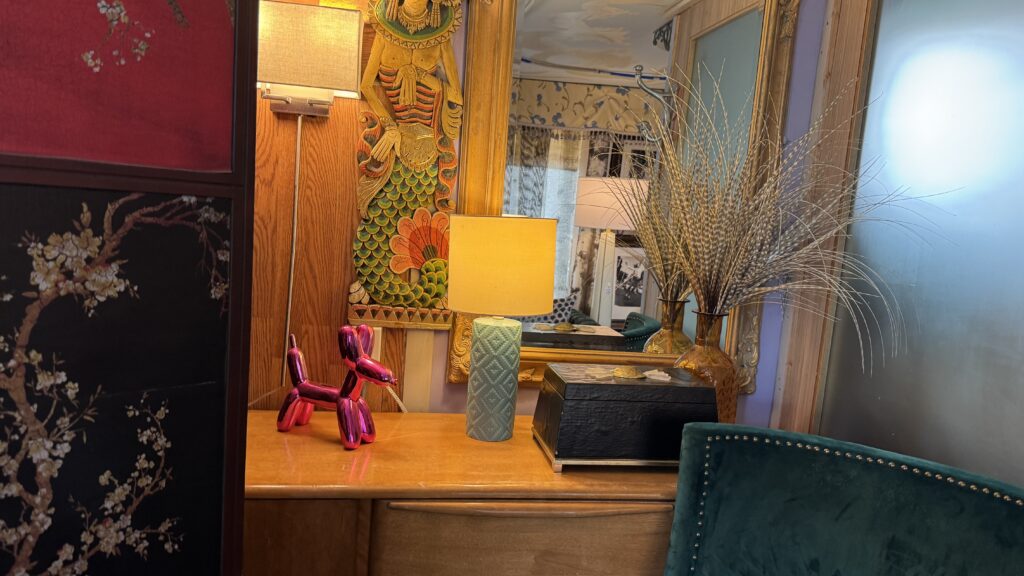
The sprawling immersive experience is a handmade art environment that slowly unfolds before you. It’s not a white-cube gallery where art hangs politely on walls, separate from daily life. It’s a maximal, intimate world you step into: salvage and sculpture, textiles and television sets, plants and found objects all tangled into one installation.
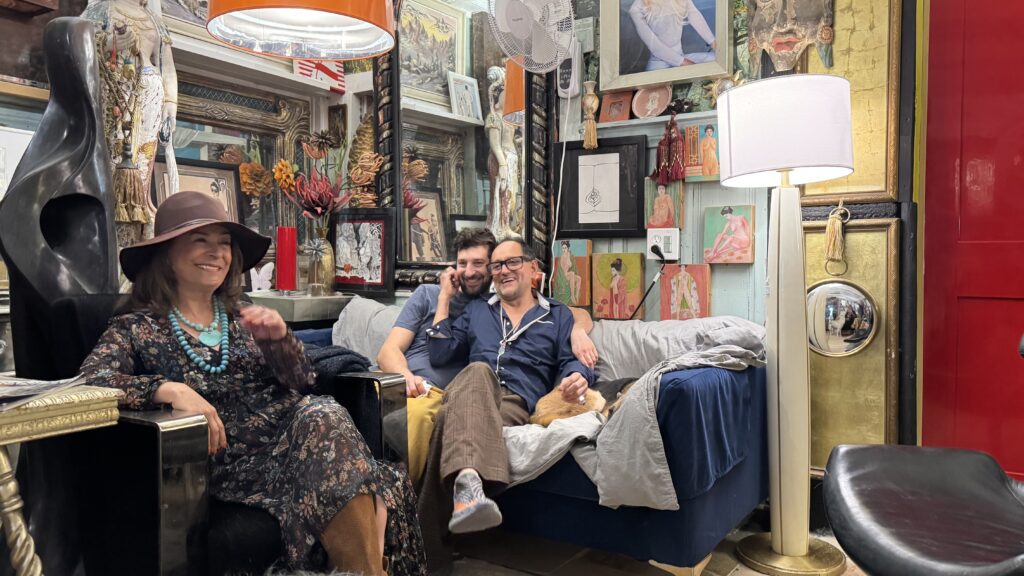
Art shows up where you don’t expect it—around a turn, inside a room, on a table, on an old TV, in the garden. Carlo’s history in fashion, nightlife, and photography is visible in the layering: sequins next to cracked plaster, couture silhouettes collaged into lampshades, colors that feel like stage lighting compressed into a single room. Jack’s hand is in the slower systems—the garden, the water paths, the small altars of objects that reward anyone who looks twice.
For Jack, Villa Anita Death Valley has always been two things at once: an immersive experience for guests and a long-term home for art in the desert. People don’t just stay here; they live inside the artwork for a few days. Many end up taking a piece of it with them—literally right off the walls. Jack sells jewelry and works on paper directly through the guest experience, so the built-in audience isn’t theoretical; it’s wandering the garden, lingering in doorways.
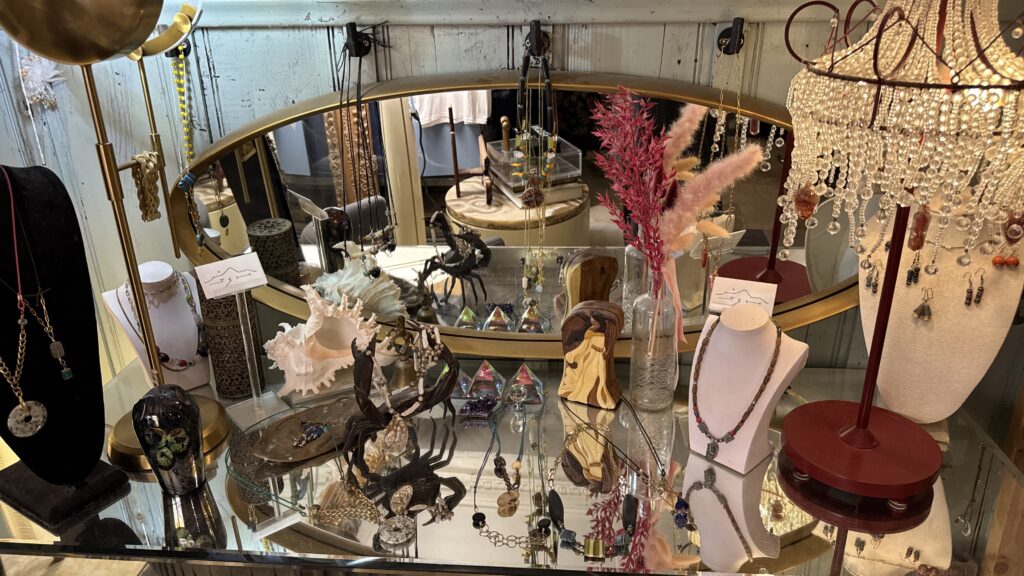
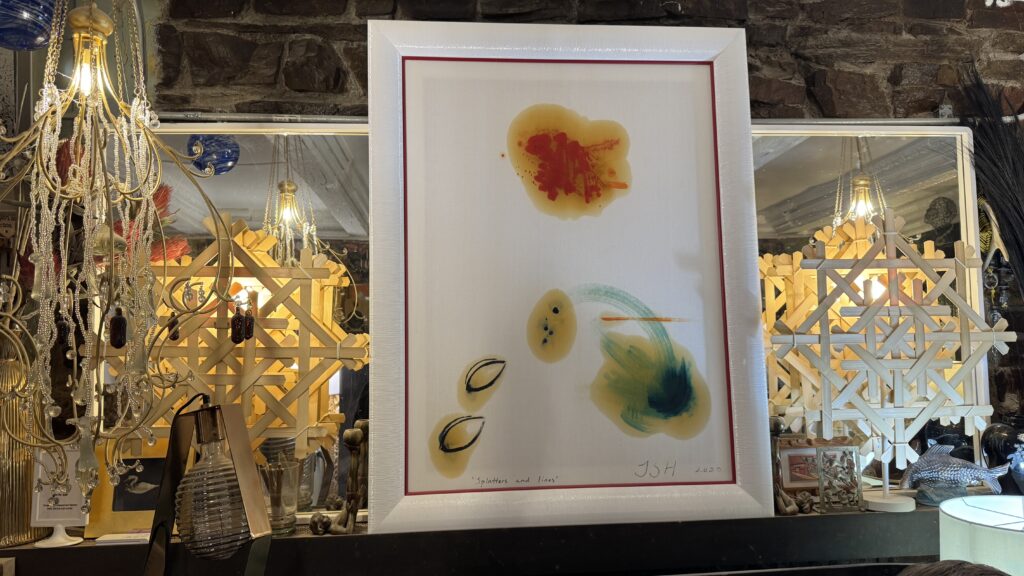
Jack will soon release his first jewelry design collaboration with his pal and neighbor Wonderhussy, a well-known adventurer and YouTube star roaming the desert in search of a good story.
Switch Off the World, Switch On the Desert
When guests arrive, the first move is almost always the same. Carlo and Jack bring them into the original desert house, the Robert Blake structure that seeded everything. There’s a small orientation: a bit of history, how the project started, and a reminder that yes, the lack of cell service is intentional. The WiFi is minimal and local. The point is not to be reachable. Jack says many guests come here specifically for no connection to the outside world.
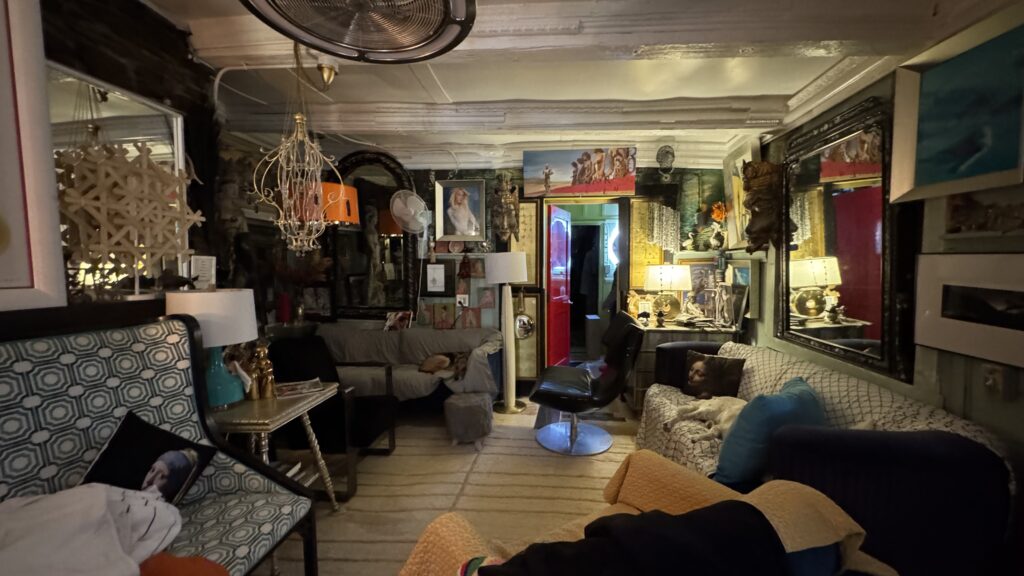
From there, they walk you through the property to your room. On the way, your eye is already working overtime—trying to catalog the hand-painted surfaces, the sculptures made from repurposed appliances, the way color and object placement make even a corridor feel staged.
While the grounds pull you outward — into the garden, the desert, the long dissolve of a Mojave sunset — the rooms draw you back in with equal force. None of them will look exactly the same twice. Carlo and Jack are always adding, subtracting, rearranging — the rooms are as alive as the rest of the place.
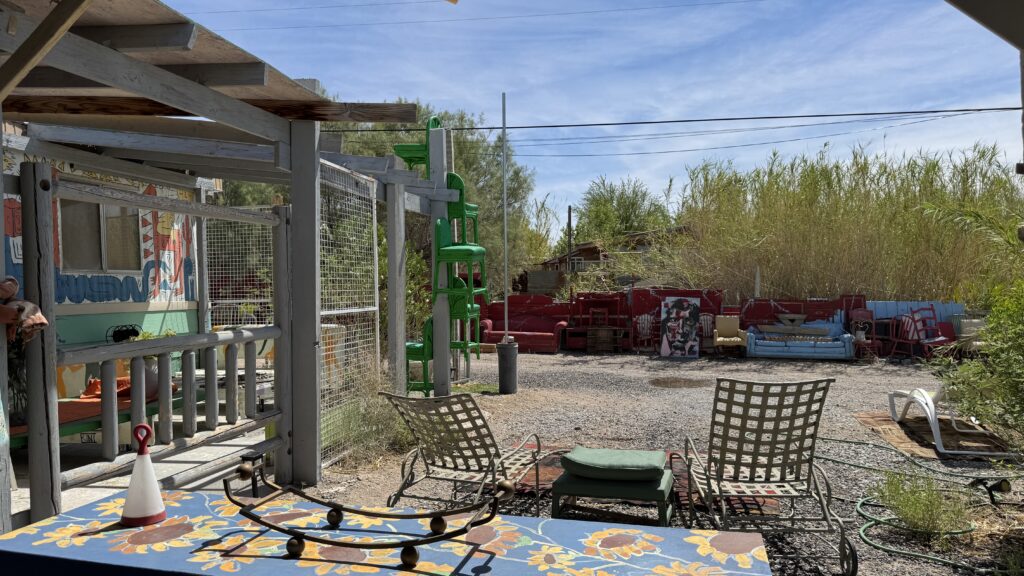
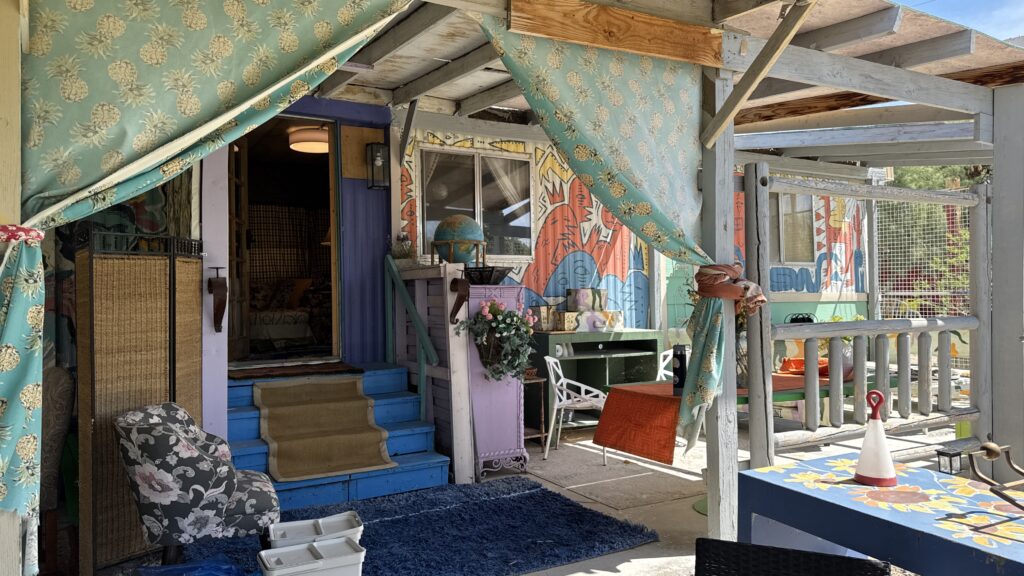
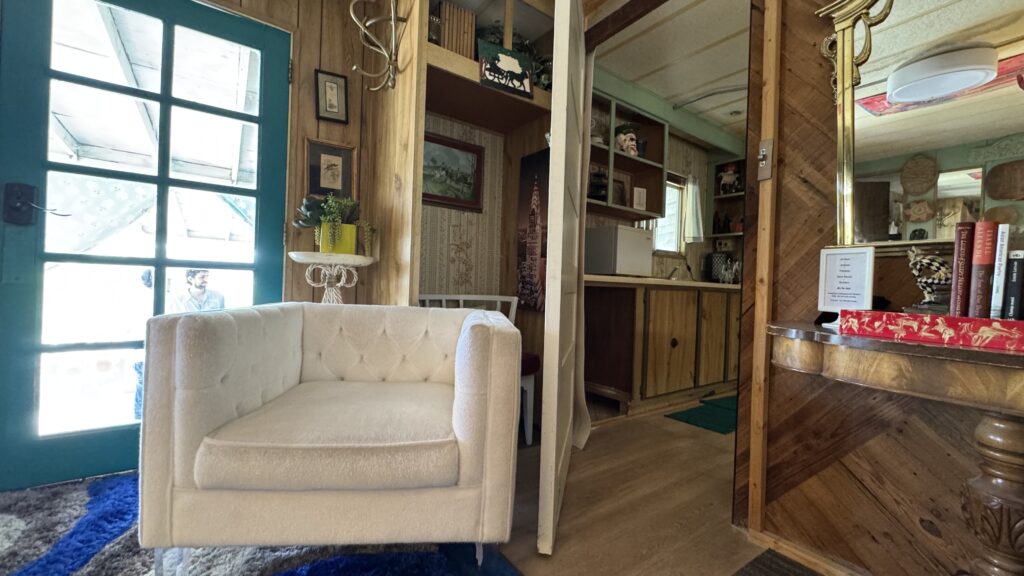
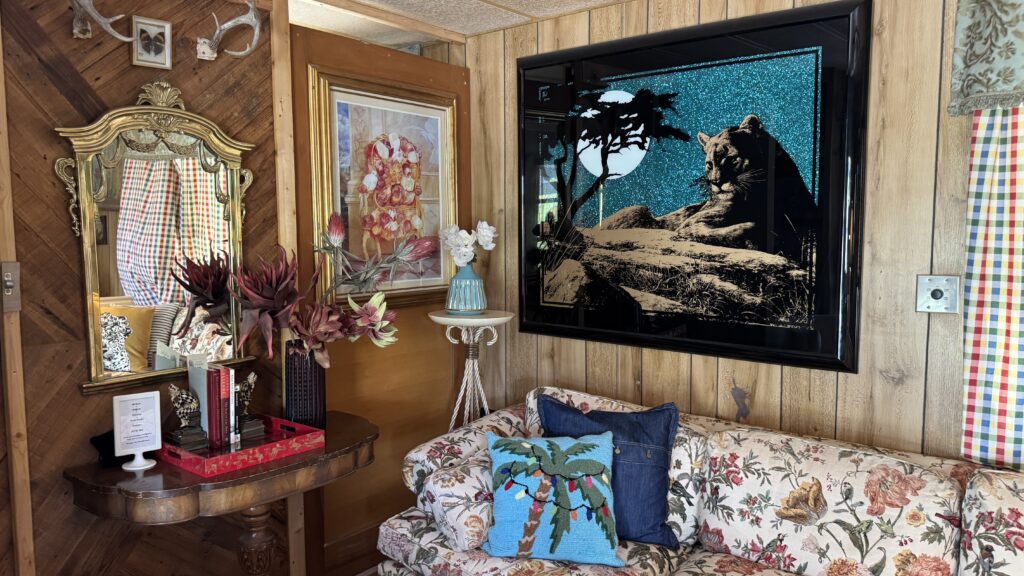
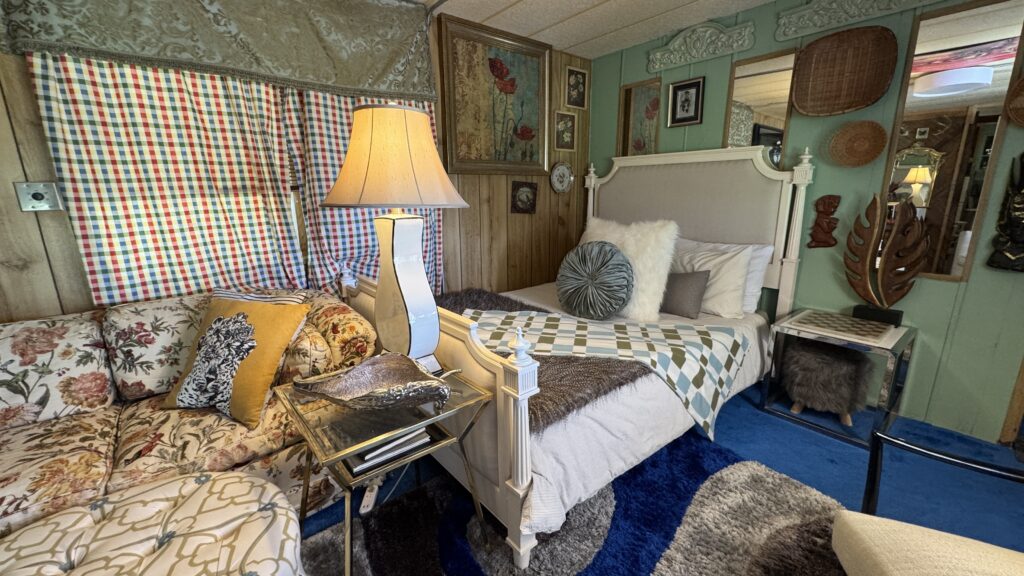
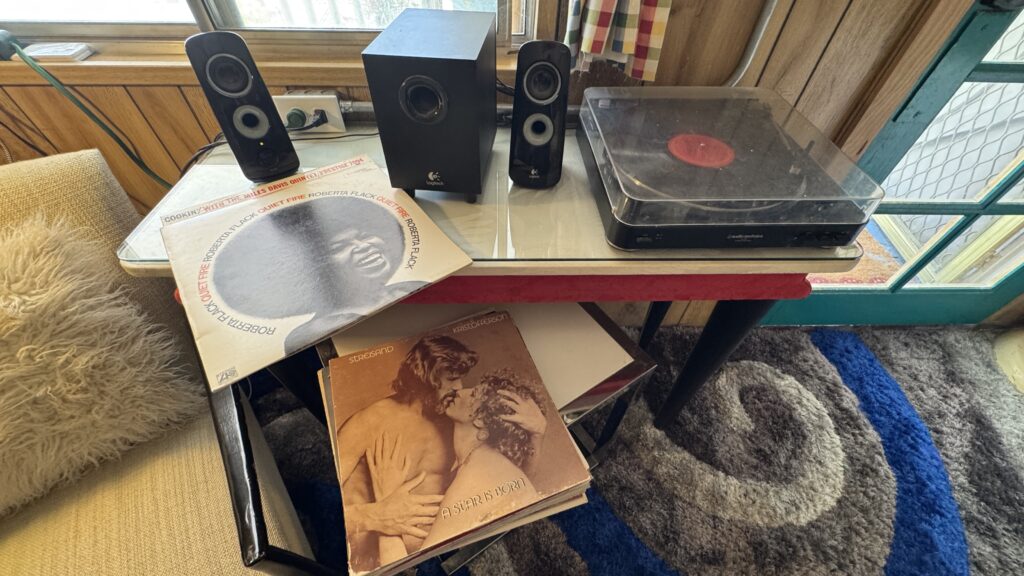
Once you’ve dropped your bags, a subtle quiet sets in. The notifications stop. The hum of the outside world goes flat.
That’s when the decompression begins. Some guests immediately seek out a quiet corner or a shady chair. Others walk straight into the desert, down toward the open washes and low hills that frame the property. Some sign up for a class: desert micro farming, ceramics and painting, or a jewelry session with Jack, a hands-on project that leaves them with an object tied to the place.
Villa Anita Death Valley is intentionally interactive—this isn’t a museum that asks you to keep your distance. You’re gently expected to experience your surroundings. Guided tours are available whether you stay the night or not, and classes are open to all.
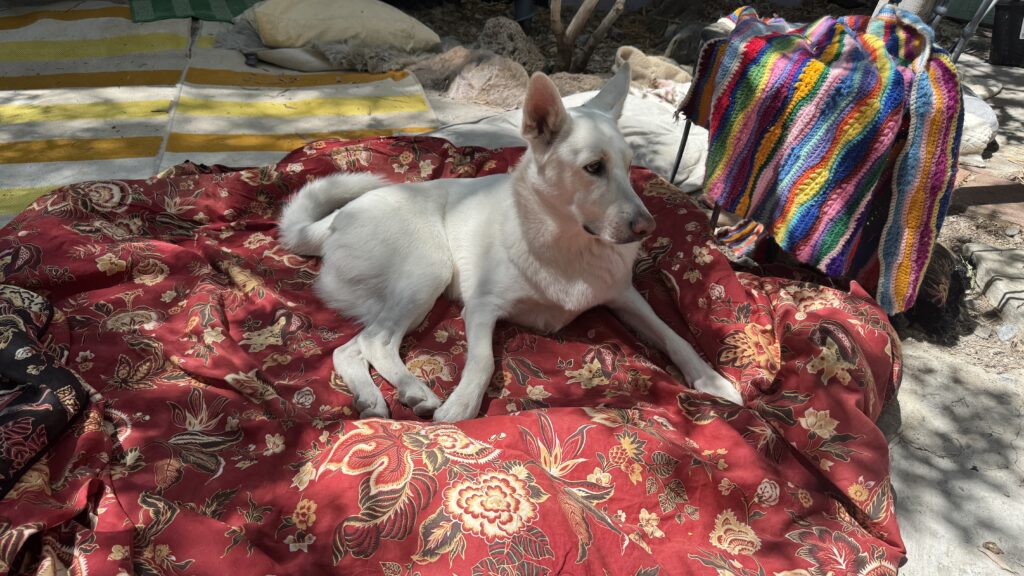
Dogs live on the property, part welcome committee, part moving sculpture, part emotional support crew. There are also resident cats. Some accommodations are quieter and more private, with less direct interaction; others are fully in the mix and pet-friendly. Guests are encouraged to be clear about their needs—privacy level, animal comfort, schedule—and Carlo and Jack adjust accordingly.
The desert around them is powerful and isolating by design. At night, the mountain ranges around Tecopa and Death Valley National Park turn into dark cutouts. The stars are so bright they feel almost noisy. It can be disorienting to feel so fully “in the middle of nowhere”—but for many guests, that’s the point.
As evening settles over Villa Anita, guests drift in from their rooms, the paths, and the garden, gathering together in the main house to share community. People from all over the world find themselves at the same table as Tecopa locals and regulars from the region, the conversation moving easily between stories of travel, the desert, and the evolving artwork they’re sitting inside. Carlo and Jack move through the room and outdoor spaces like hosts and collaborators at once—topping off glasses of water, answering questions about the Amargosa Basin, pointing out details in the rooms and gardens that most people missed on first pass. As the night winds down, Carlo will throw out a philosophical query to his guests that keeps them sharp and thinking about themselves.
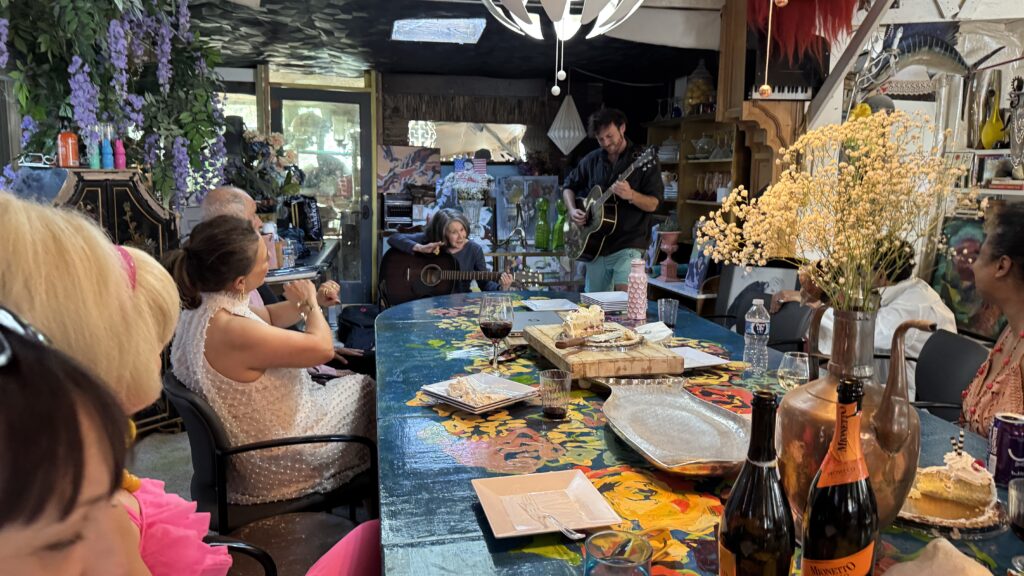
Dogs may wander through, cats appear and disappear from their favorite spots, and the house itself becomes part of the conversation: surfaces painted by hand, objects salvaged and reimagined, the quiet just beyond the property reminding everyone how far they’ve stepped outside their ordinary lives.
The Garden: Desert Systems for a Living Oasis
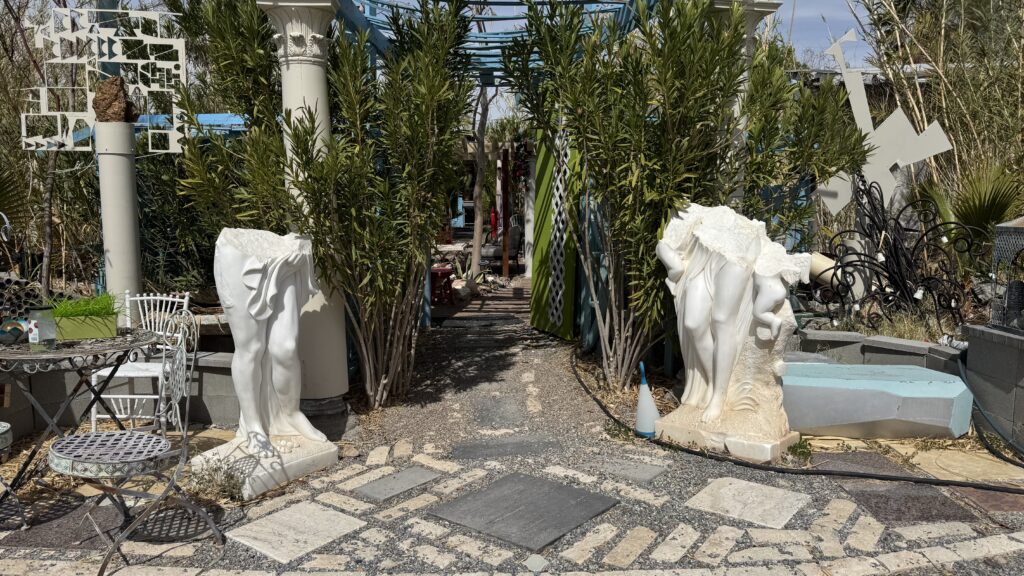
Out back and in between structures, Villa Anita unfolds into a patchwork of gardens that read as artwork and infrastructure at the same time. This is Jack’s long game.
He grows and propagates date palms from seed—patient little experiments in each pot, some now eight years old. Others are transplants from nearby groves like China Ranch, including known female date palms. He’s constantly testing what can live where: sometimes a plant fails in one bed only to thrive a few yards away, where wind, light, and runoff create a different microclimate.
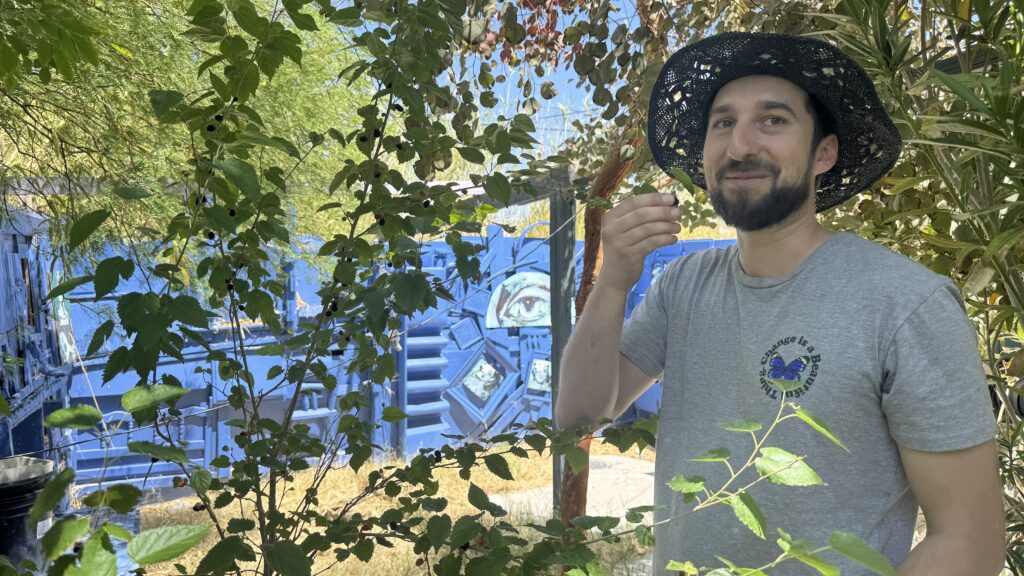
The gardens themselves fall into loose “rooms”:
Kitchen garden + nursery
A working zone with herbs, root crops in grow bags, succulents, and young date palms. Shade cloths and a simple sprinkler system create a pocket of humidity—a small miracle in this climate.
Orchard gardens
Shaded, densely planted areas with pomegranates (the most reliable fruit here), along with figs, grapes, mulberries, Asian pear, plums, and experimental low-chill apples that might be better suited to the desert’s brief winters. Pomegranates are the stars: they flower heavily, fruit on new growth, and ripen into October.
Buried hugelkultur and compost systems
Instead of above-ground mounds that lose moisture, Jack buries branches and organic matter to hold water and build soil slowly. The beds sink as they decompose—an unintended consequence that becomes part of the design language. Kitchen scraps go into pit-compost areas, feeding the system from below without inviting pests.
A landscape of useful shade
Eucalyptus, regional ash, mesquite, bottlebrush, trumpet flowers for hummingbirds, aloe spikes, jasmine trained along lattice, and even volunteer tomatoes that appear where conditions happen to be right. Shade isn’t just comfort; it’s strategy. It changes what else can live under it.
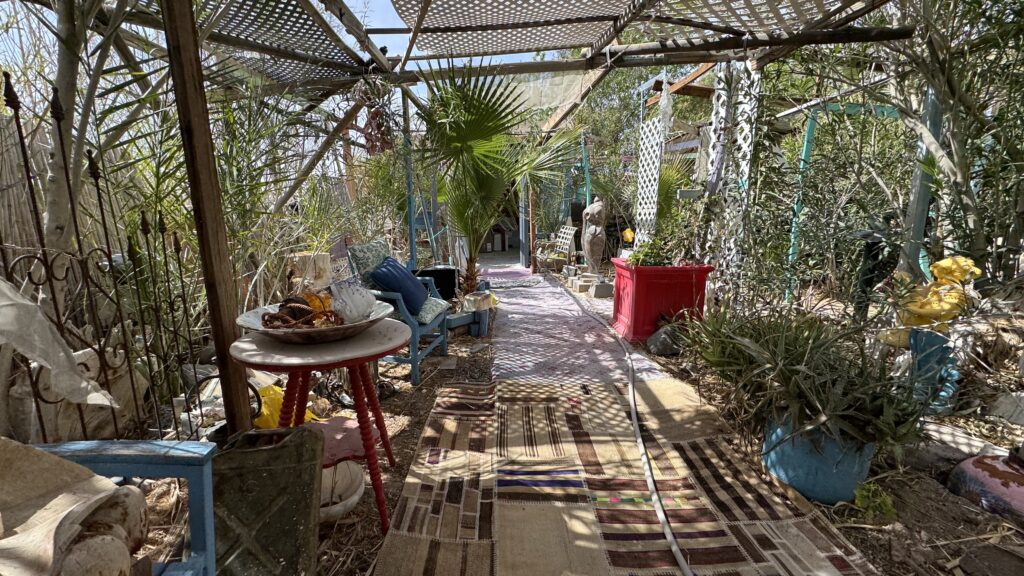
There’s a deliberate artfulness to the infrastructure: a sink turned into a fountain, planters made from repurposed appliances, irrigation lines threaded through sculptural elements. Walking through the garden at high noon, you move in and out of these green rooms—each one a small defiance of the wider desert’s austerity.
Hospitality as Stagecraft
Right now, Villa Anita functions as a guest-centered, hospitality-driven installation. Days are shaped by arrivals, departures, and the constant reset in between. Cleaning and resetting a room here can feel like re-curating a small gallery: which objects go on which table, how the color story reads when you open the door, what the first visual hit will be.
A whole cast of characters keeps the place humming. Alongside Carlo and Jack is Carlo’s nephew, Weston, who arrived a couple of years ago to support the operation. Weston moves through the property like the most fashionable hybrid of butler, bellhop, and concierge you’ve ever seen—perfectly put-together, preternaturally well-timed, with a knack for making guests feel both looked after and entirely at ease. He helps with everything from luggage to table settings, often becoming the quiet connective tissue between guests and the house’s more theatrical moments.
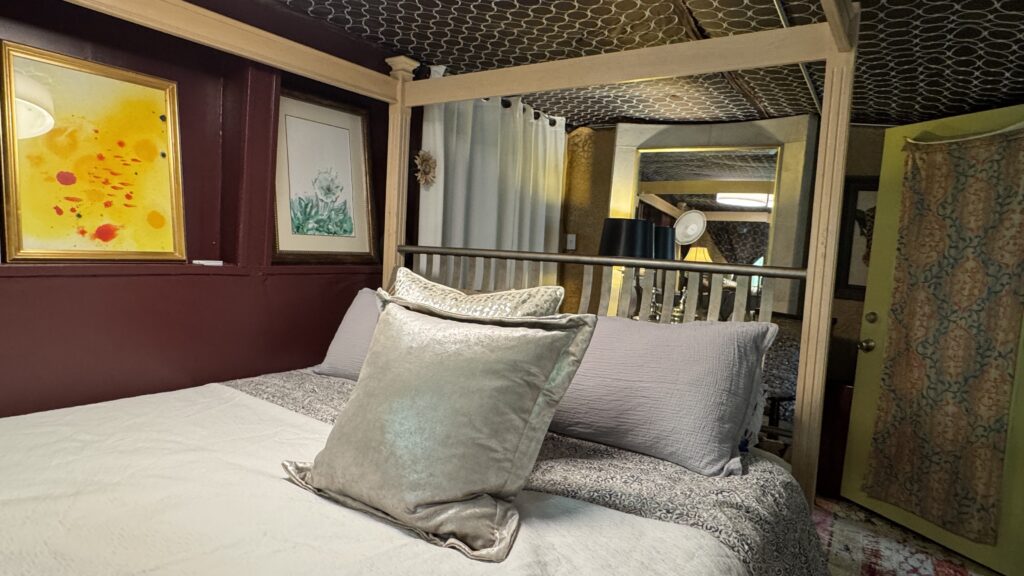
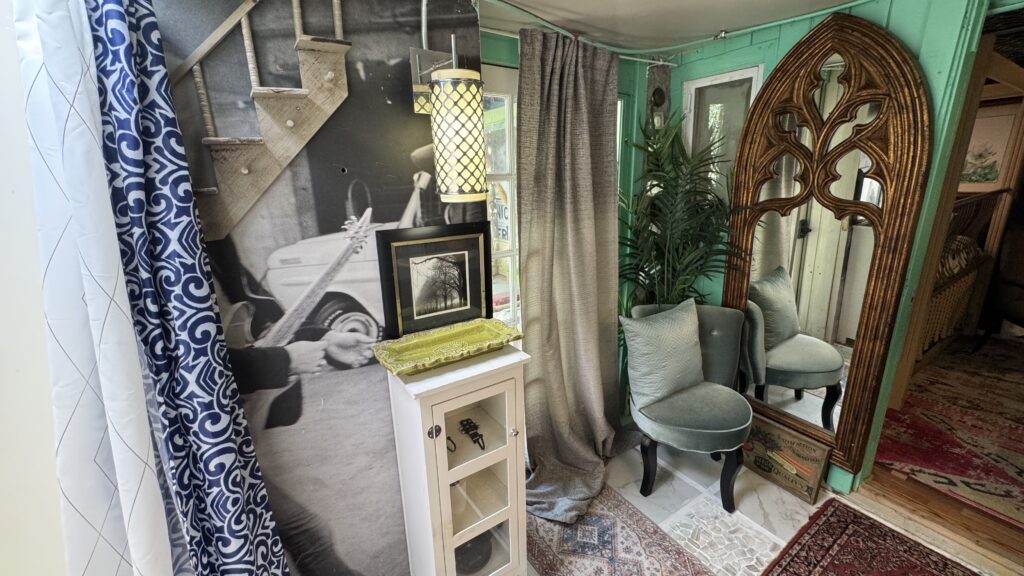
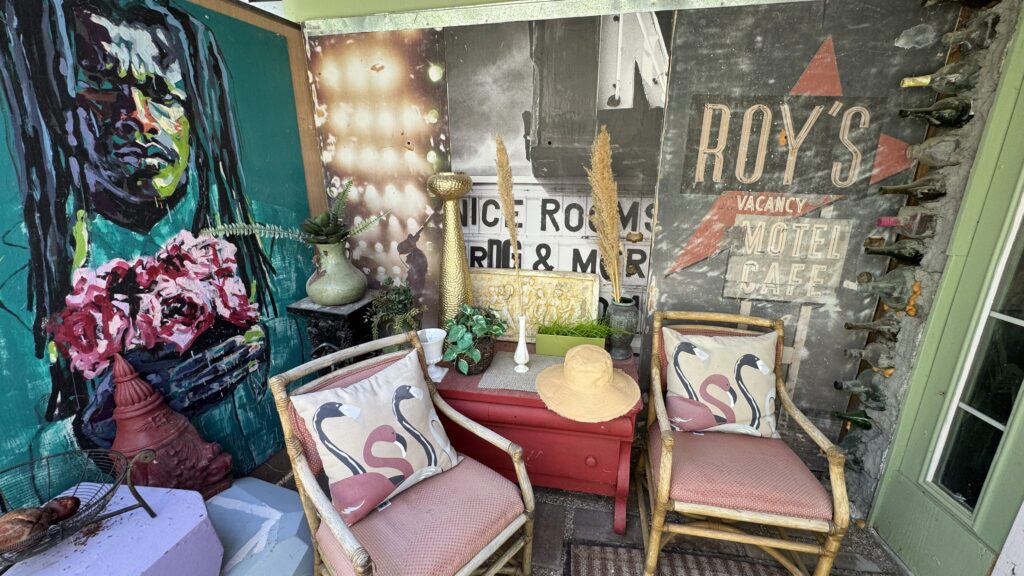
On the grounds, Villa Anita unfolds as an experimental art environment woven through structures, rooms, pathways, and daily life—art integrated into use rather than set apart. A ceramic studio functioning as much like a lived-in sitting room as a workspace. Shaded seating and small domestic rhythms keep the place feeling alive rather than staged, while salvaged furniture quietly becomes kitchen islands, old frames turn into molding, and corners of the property shift and reconfigure as new ideas take hold.
Visiting artists occasionally land here too, leaving work behind that folds into the gallery and the permanent collection: painted TVs looping mid-century female singers, hand-painted furniture that becomes part of the set, small interventions that live on long after the artist has left.
Expanding the Dream
Looking ahead, Jack and Carlo’s vision is to expand without diluting what makes Villa Anita Death Valley rare. On the less-built side of the property, they are picturing a small cluster of new cabins—three or four structures gathered around a pool.
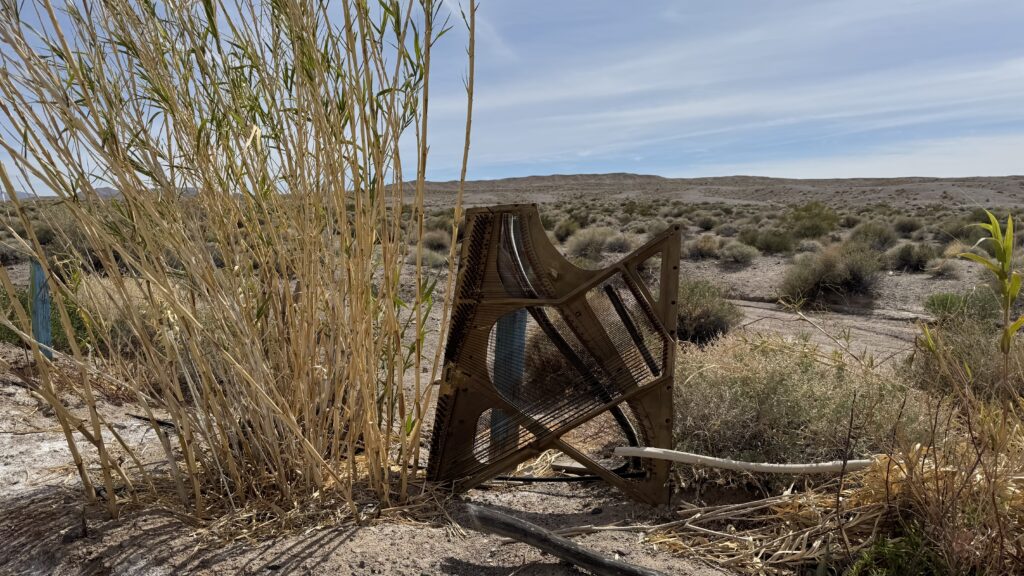
In the years ahead, they imagine Villa Anita Death Valley unfolding into two distinct but interlocking worlds: the original compound, immersive and maximal, a full-tilt fantasy for those who want to quite literally live inside the artwork; and, alongside it, a more minimal, design-forward counterpart—quieter, cleaner-lined, for guests who crave the desert’s contemplative side with a lighter visual load.
They talk about adding shared gathering point in this new zone—a small social anchor that would give visitors, locals and passersby a reason to stop, even if they’re not staying the night. And they’re serious about deepening the artist presence: possibly building a residency framework where visiting artists can stay, make work, and use the property’s accumulated materials as raw supply.
The dream is an “army of artists”—people who can help turn decades of Carlo’s brilliantly salvaged material into installations, objects, rooms, and gardens. It’s a vision of development that’s both practical and idealistic: structurally sound, and resilient enough to last, but still strange, specific, and deeply personal.
In the end, Villa Anita Death Valley is a long experiment in what happens when you let art and life collapse into each other, then drop the whole thing in the middle of the Mojave. Carlo’s iconic taste and style, Jack’s talents in the arts and honed land sensibility, Weston’s effortless hospitality, the dogs, the cats, the garden, the guests—it all loops together. The desert is not just backdrop here; it’s a collaborator, an editor, and sometimes a critic.
And for a few days at a time, if you’re willing to disconnect, it becomes your world too.
Visit Villa Anita Death Valley
Leave a Reply