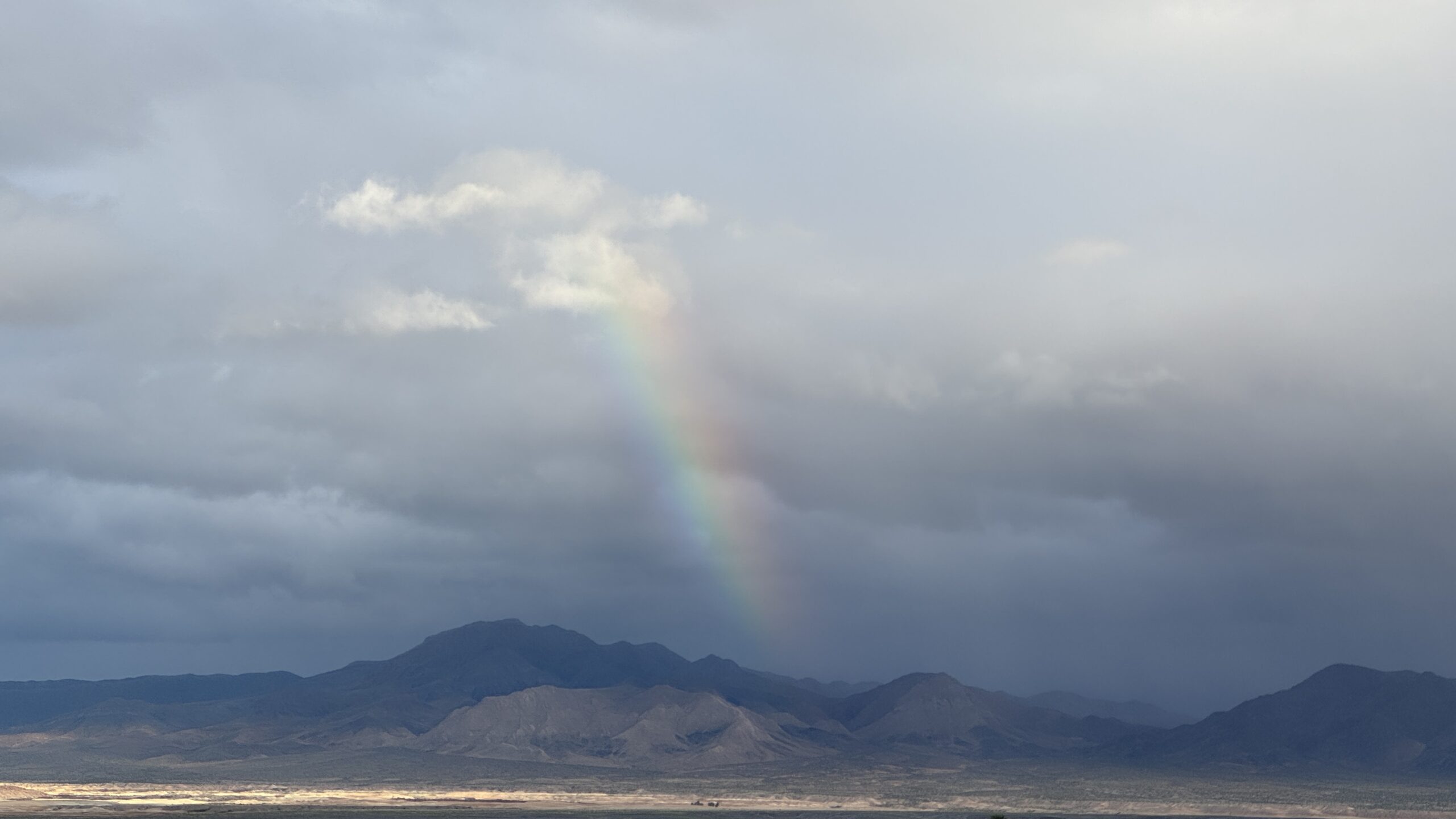
After a week of relentless desert wind that sent dust across the valley floor and rattled every loose screen door in Tecopa, the Amargosa Basin is sliding into the familiar rhythm of late winter in the Mojave: warm days, restless gusts, and the steady arrival of visitors chasing the first signs of spring. Temperatures are climbing toward the busy season in Death Valley National Park, and despite the wind’s best efforts to shorten the show, the desert is delivering one of its most impressive wildflower displays in years. At the same time, several local projects and community efforts—from highway improvements and transportation planning to a proposed community garden—are moving forward across the region.
Death Valley Sees Best Wildflower Bloom Since 2016 as Desert Gold Leads the Show
Death Valley National Park is experiencing its best wildflower bloom since 2016, with widespread flowering underway and many plants still developing. The bright yellow Desert Gold is currently the most visible species, joined by blooms such as brown-eyed evening primrose, golden evening primrose, phacelia, and sand verbena, with occasional sightings of cryptantha, a small white flower known for its pleasant scent, and the distinctive desert five-spot, a rarer but sought-after find.
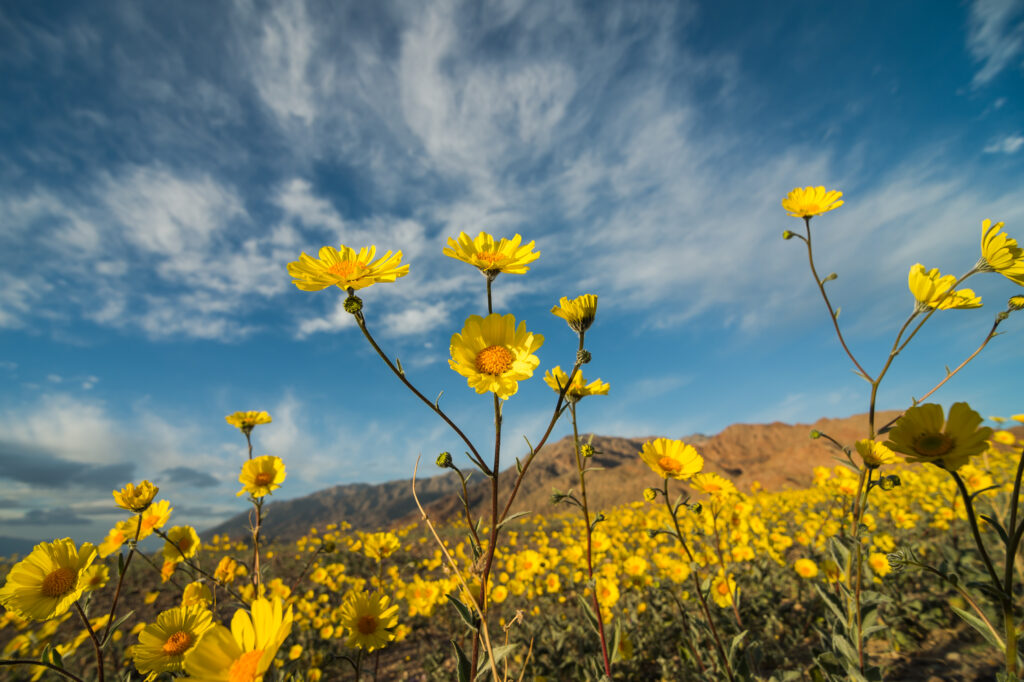
As of March 4, 2026, notable blooms have been reported along North Badwater Road between CA-190 and Badwater Basin, South Badwater Road near Ashford Mill, Highway 190 between Stovepipe Wells and Furnace Creek, and the Beatty Cutoff, where visitors can see combinations of Desert Gold, brown-eyed primrose, sand verbena, phacelia, gravel ghost, Mojave desert star, and desert five-spot. Low-elevation areas across the park are blooming now and are expected to persist through mid-to-late March, depending on weather, while higher elevations typically see peak blooms from April through June.
Park scientists note that a good wildflower year depends on three key conditions: well-timed rainfall, warming spring temperatures, and limited drying winds. Rainfall is the most critical factor. A storm delivering at least half an inch of rain is needed to wash the protective coating from wildflower seeds and trigger germination. Continued growth depends on evenly spaced rainstorms throughout winter and spring, with the best displays often following an early fall rain in September or October combined with an El Niño pattern that brings above-average precipitation to the Desert Southwest.
After germinating during cool winter storms, many plants remain small and close to the ground while quietly building strong root systems below the surface. When spring sunlight warms the soil, those established plants rapidly grow and begin to flower.
Wind can just as quickly end the show. Frequent spring windstorms without additional rain can dry out delicate sprouts and shorten the bloom season. Desert plants have adaptations such as waxy, hairy, or spiny leaves to conserve moisture, but wildflowers still must complete their life cycle quickly before dry winds and rising late-spring temperatures return the landscape to its typical arid state.
While visitors often use the term “superbloom,” there is no official definition. The phrase generally refers to years when flowers appear in broad swaths of color across the desert floor rather than scattered individual plants, especially striking at low elevations where the ground is usually bare sand and gravel. These conditions are rare, occurring roughly once a decade, with notable recent superblooms in 2016, 2005, and 1998.
Park officials also caution visitors about certain purple wildflowers, particularly species of phacelia (often called scorpion weed). Though attractive, these plants can cause skin irritation similar to poison ivy or poison oak, leading to rashes, itching, or blistering. Phacelia often grows mixed among stands of yellow Desert Gold, making it easy to brush against while walking. Visitors are advised not to touch wildflowers and to stay on established paths while viewing the bloom.
Even in quieter years, Death Valley rarely goes completely without flowers—but in seasons like this one, the desert briefly transforms into the kind of colorful landscape that appears only under near-perfect conditions.
State Line Road Project Would Rebuild Key Gateway to Death Valley
A long stretch of desert highway connecting Death Valley Junction to the Nevada border could soon see its most significant overhaul in decades.
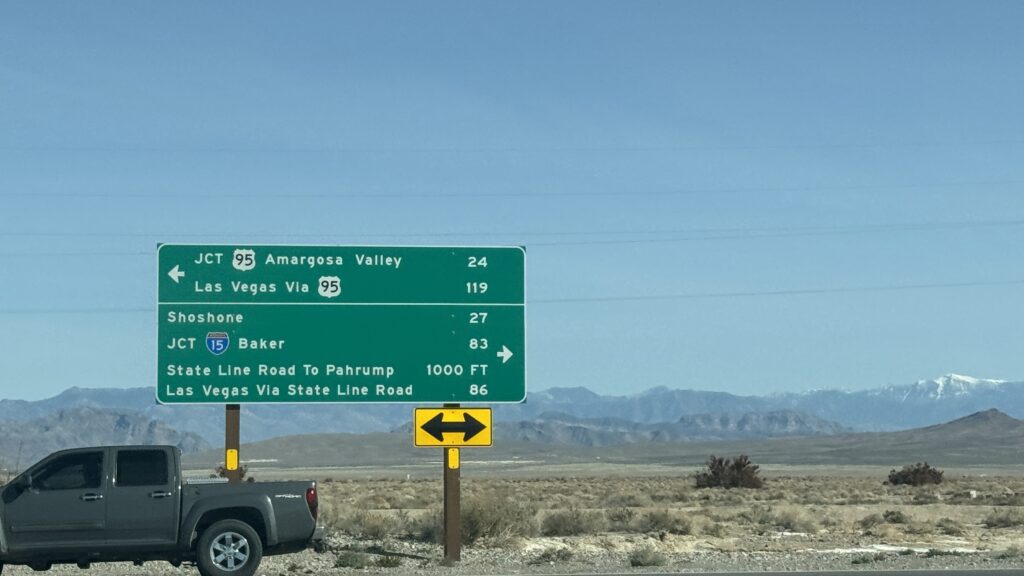
Inyo County is advancing plans for a roughly $22 million reconstruction of State Line Road, a heavily traveled corridor that serves as one of the primary routes into Death Valley National Park and the public lands surrounding it. The project, funded through the Federal Lands Access Program, aims to rehabilitate and widen the road while improving safety for the growing stream of visitors traveling through the remote southeastern corner of the county.
Under current plans, the roadway would be widened to approximately 28 feet, with full-width travel lanes and paved shoulders replacing the narrow, aging pavement that now carries vehicles across the desert basin. The work would also include updated striping, signage, and other safety features intended to make the route more reliable for both local traffic and the steady flow of tourists heading toward Death Valley, Ash Meadows National Wildlife Refuge, and nearby Bureau of Land Management lands.
The road’s location at the edge of two states makes the project something of a regional undertaking. Improvements on the California side are expected to connect with a complementary road upgrade on Bell Vista Road in Nevada, creating a smoother and safer corridor across the state line.
For now, the project remains in the planning and environmental review stage, with county officials working through the federal and state approvals required for construction. If the schedule holds, construction funding is anticipated later in the decade, with work tentatively projected to begin around 2028.
When completed, the improvements would modernize one of the desert’s quiet but essential highways — a road that, despite its remote setting, serves as a gateway for thousands of travelers entering the stark landscapes of Death Valley each year.
Survey Crews Mark Early Work on Tecopa Transportation Project
Anyone driving Tecopa Hot Springs Road lately may have noticed something new lately: county workers with survey equipment measuring along the roadside and a few fresh road-work signs posted along the corridor. The activity appears to be early field work for a long-planned transportation project intended to link Tecopa and Tecopa Hot Springs.
As previously reported, the project, known as the Connecting Tecopa Bicycle and Pedestrian Safety Corridor, would build a roughly 2.9-mile multi-use path between the two communities, creating a safer route for pedestrians and cyclists along a road that currently has little shoulder and no sidewalks.
Inyo County planning documents note the project is a multimodal pathway connecting what they describe as the “disadvantaged” communities of Tecopa and Tecopa Hot Springs.
The improvements are expected to include a shared-use path and pedestrian and bicycle facilities within the community cores.
The corridor is funded largely through California’s Active Transportation Program. While construction is still several years away with an expected completion date of 2028, the presence of survey crews suggests the project is entering its early design and engineering phase.
Not everyone is enthusiastic. A handful of local residents have voiced opposition to the plan in recent discussions. But given Tecopa’s car-centric habits, the resistance may simply reflect the fact that not everyone in town is eager to take up walking or bike riding.
Vibe 99.7 Giving Away Tickets to Unitecopa Desert Music Festival at Kit Fox Café
Speaking of Uniting Tecopa, Las Vegas radio station Vibe 99.7 is giving listeners a chance to win tickets to Unitecopa, a one-day desert music and culture gathering set for March 21, 2026, at the Kit Fox Café in Tecopa.
The event will run from 12 p.m. to 10 p.m. at 100 Old Spanish Trail Highway, transforming the desert venue into an open-air music space built around reggae, community, and laid-back Mojave energy.
The café’s pizza chef, John Fuller, provided the Southern Inyo Fire Protection District with a briefing on the upcoming event during the district’s most recent meeting.
Headlining the festival is Don Carlos, the legendary Jamaican reggae singer and original member of the iconic group Black Uhuru. Known for his smooth vocal style and uplifting roots reggae message, Don Carlos has released classics including Harvest Time, Suffering, and Just a Passing Glance. After decades of international touring, he remains one of the most recognizable voices in conscious reggae.
Joining him is Mello Banton, a Kingston-born reggae artist known for blending roots reggae and conscious dancehall with powerful vocals and messages of unity and cultural pride.
The event will also feature Dub Siren HiFi, a Los Angeles–based sound system collective that represents reggae and dub sound system culture across Southern California. Founded in 2012 by Osaka-born producer Daisuke Sawa, the group has hosted international dub legends including Scientist, OBF, DJ Vadim, Iration Steppas, and King Shiloh, and currently operates one of California’s largest reggae sound systems.
Organizers describe Unitecopa as a full-day desert gathering centered on music, culture, and connection.
Attendees can expect a relaxed outdoor setting with space to gather, dance, and experience live reggae against the backdrop of the Amargosa Basin. The event will also feature a curated lineup of food, drinks, and local vendors.
Food offerings include Jamaican plates with jerk chicken, curry goat, or jerk tofu, served with plantains and rice and peas, along with island-style desserts. The Kit Fox Café will also serve pizza by the slice, while hamburgers and hot dogs will be available fresh off the grill.
Drinks will include Jamaican-inspired cocktails, Red Stripe beer, and other beers on tap.
Local vendors will also be onsite offering art, goods, and festival finds.
General admission tickets are $60.
Whether visitors come for the music, the community, or the desert atmosphere itself, organizers say Unitecopa is about unplugging for a day and sharing a unique experience in Tecopa’s wide-open landscape.
Supervisors Split on Home Kitchen Businesses, Majority Stops Proposal
In January, the Inyo County Board of Supervisors declined to move forward with a Micro Enterprise Home Kitchen Operation (MEHKO) program after a workshop reviewing how the model has been implemented elsewhere in California.
Environmental Health Director Jerry Oser presented a second-round overview of the program, including research on MEHKO ordinances adopted across the state. Oser told the board he does not recommend implementing the program in Inyo County at this time.
The proposed home kitchens would still require inspection and oversight like any other commercial kitchen—a responsibility that currently falls to Environmental Health Director Jerry Oser, the county’s sole health inspector.
Public comment included remarks from Lauren Wolfer speaking on behalf of the Cook Alliance and Environmental Health Operations Technician Jennifer Mills. Two written comments were also submitted for the record: one opposing MEHKOs from the Eastern Sierra Community Services District and one supporting the program from the Cook Alliance.
During board discussion, Supervisors Jeff Griffiths and Scott Wadelton expressed support for exploring the program, while Chairperson Scott Marcellin and Supervisors Jennifer Roeser and Trina Orrill opposed moving forward. With a majority of the board against the proposal, supervisors directed staff to halt further work on a MEHKO ordinance in Inyo County.
Plans for Tecopa Community Garden Advance with School Board Support and County Interest
Plans to establish a community garden at the Tecopa-Francis School are gaining momentum following months of discussions with the Death Valley Unified School District, local residents, and county officials.
The project, which proposes using the backyard of the Tecopa-Francis School campus for a shared garden space, has drawn support from community members and local government leaders who see it as a way to improve food access and strengthen social ties in the small desert community. The school does not currently have any students enrolled.
In recent remarks to the Inyo County Board of Supervisors, Supervisor Will Wadelton noted that he has participated in several community meetings in Tecopa with members of the soon-to-be-formed Southeast Inyo Advisory Committee, a nonprofit group focused on addressing local needs such as food access and transportation resources.
Meanwhile, community member Julie Finn, who has been coordinating the garden effort, has been working directly with the Death Valley Unified School District to move the concept toward implementation.
Finn first presented the idea to the Death Valley School Board on December 5, proposing that the unused backyard area at Tecopa-Francis School be converted into a community garden. According to Finn, board members and Superintendent Jim Copeland responded positively to the concept, expressing enthusiasm for a project that could increase access to fresh food, create opportunities for social connection, and potentially involve local students in the future.
One question raised during the initial discussion was liability coverage. District officials began reviewing insurance considerations while continuing discussions about how the project could proceed.
Throughout December and January, Finn and Copeland continued to coordinate on next steps. On December 22, Copeland informed Finn that the district had submitted a water sample from the school site to Environmental Health to better understand what types of plants would grow successfully in Tecopa’s desert conditions. When the two spoke again in late January, Copeland referenced a successful raised-bed garden project in Twentynine Palms as a possible model for the Tecopa effort.
A 2024 Los Angeles Times gardening column highlighted insights from two experienced desert growers about producing food in extremely dry climates. Horticulturist and author Maureen Gilmer, who lives in Morongo Valley and wrote the 2015 guide “Growing Vegetables in Drought, Desert, and Dry Times,” shared lessons on cultivating crops in hot, water-scarce environments. She was joined by Josh Nash, manager of Faultline Farm in Twentynine Palms, who has spent several years growing organic fruits and vegetables both at his home and for the historic 29 Palms Inn. According to inn owner Heidi Grunt, the farm now supplies roughly one-third of the produce used by the restaurant, demonstrating that productive agriculture is possible even in the harsh desert climate.
TecopaCabana has previously explored the region’s early agricultural history, tracing how settlers and homesteaders experimented with irrigation and small-scale farming in the Amargosa Basin long before today’s renewed interest in desert gardening.
Finn returned to the Death Valley School Board on February 19 to provide an update and present a proposed mission statement along with draft guidelines for the garden’s operation.
Board members responded positively but requested additional details before granting final approval. Among the items requested were site drawings showing the proposed garden’s location on campus, specifications for raised beds and irrigation systems, a list of project participants, and a statement clarifying that produce harvested from the garden would not be sold for profit.
The board also asked organizers to address liability concerns by providing proof of insurance or implementing waivers for individuals participating in the garden.
Support for the idea has also surfaced in broader community discussions. At a February meeting of the soon-to-be-official Southeast Inyo Advisory Committee, several residents expressed enthusiasm for creating a shared gardening space. Supervisor Wadelton also voiced support for locating the garden at the school site and indicated he was aware of the water testing already underway.
The advisory board’s broader mission includes improving food resources and transportation options in Tecopa, including exploring donation programs and possible refrigeration facilities to support food distribution. Finn said collaboration with the advisory group could help strengthen the garden project as it develops.
With encouragement from the school district, county officials, and local residents, organizers say the next phase will focus on completing the documentation requested by the school board and gathering volunteers interested in helping move the project forward.
Finn has begun circulating a questionnaire to identify community members willing to participate in planning meetings and assist with the design and organization of the garden.
“With all of this positive energy from the school board, the county, and our own neighbors,” Finn wrote in a message to the community, “it truly feels like the roots of this project are already taking hold.”
To join the effort, fill out the participation form.
China Ranch’s Brian Brown to Share 100 Years of Northern Mojave History at Shoshone Museum
Brian Brown, the longtime steward of China Ranch and a keeper of the region’s historical memory, will present “100 Years of Photographic History in the Northern Mojave” on Saturday, March 14 at the Shoshone Museum.
Brown, the patriarch of the family-run China Ranch Date Farm, has spent decades preserving photographs, artifacts, and stories connected to the early settlers of the Mojave Desert. During the presentation he will share rarely seen images from his personal archives, offering a glimpse into the lives of the hardy individuals who built communities across the harsh landscapes surrounding Death Valley.
The talk will blend history and storytelling as Brown walks audiences through a century of desert life, illustrating how the region evolved from isolated mining camps and ranches into the small communities visitors recognize today.
China Ranch itself stands as one of the desert’s most unlikely oases. The small family farm sits tucked into a canyon near the southern edge of Death Valley, where a wandering stream nourishes towering cottonwoods and willows. Date palms rise above the greenery, and wildlife gathers along the water—an unexpectedly lush pocket set amid the stark beauty of the Mojave.
Brown’s presentation will take place Saturday, March 14 at 1 p.m. in the Mammoth Room at the Shoshone Museum. Refreshments will be served, and the public is invited to attend.
Organizers say the afternoon offers a rare chance to see historic photographs seldom displayed publicly while hearing the stories behind them from one of the region’s most knowledgeable local historians.
Leave a Reply